

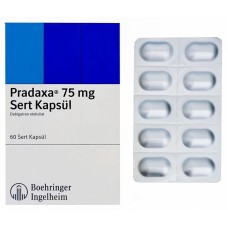
Key features of Dabigatran etexilate and its advantages
Dabigatran etexilate, a prominent member of the anticoagulant category, plays a crucial role in managing thromboembolic disorders, including atrial fibrillation and venous thromboembolism. This class of medication functions as a direct thrombin inhibitor, preventing blood clots from forming by effectively inhibiting the action of thrombin, an essential enzyme in the coagulation process. The most significant advantages of dabigatran etexilate include its oral administration route, predictable pharmacokinetics, and ease of monitoring compared to traditional anticoagulants like warfarin.
Moreover, the favorable profile of dabigatran etexilate allows for fixed dosing without the need for routine blood monitoring, simplifying treatment for both healthcare professionals and patients. This has highlighted its growing adoption within outpatient settings, where convenience and adherence to treatment are critical factors. It can be particularly beneficial for patients who require anticoagulation but wish to avoid the complexities associated with vitamin K antagonists.
Positive pharmacological properties
All products within the dabigatran etexilate category share several positive pharmacological properties that enhance their usability and effectiveness. These include rapid onset of action, a predictable pharmacodynamic response, and minimal drug-drug interactions, which facilitate seamless integration into most therapeutic regimens. Importantly, dabigatran etexilate has a gastrointestinal absorption profile that contributes to its efficacy as an oral anticoagulant.
- Pregnant women: Anticoagulants can pose significant risks during pregnancy, and dabigatran etexilate is generally not recommended.
- Children: Safety and efficacy of dabigatran etexilate have not been established in pediatric populations.
- Individuals with severe renal impairment: Caution is advised when using dabigatran etexilate in patients with impaired renal function, as accumulation can lead to an increased risk of bleeding.
- Patients undergoing certain surgeries: Temporary discontinuation is often required to minimize the risk of excessive bleeding during surgical procedures.
- Individuals with active bleeding disorders: Patients with conditions that predispose them to bleeding should avoid this class of medication.
Active substance of Dabigatran etexilate
The active substance of dabigatran etexilate is dabigatran, which has garnered significant attention in the realm of modern anticoagulation therapy. Recent research and technological advancements have led to improved formulations and delivery systems, which aim to enhance patient compliance and minimize side effects. The ongoing exploration of dabigatran's role in extended thromboprophylaxis and its effectiveness in diverse patient populations remains a hot topic among healthcare professionals.
Furthermore, the focus on developing reversal agents for dabigatran's anticoagulant effects marks a significant advancement in the management of bleeding events associated with its use. The approval of idarucizumab as a reversal agent for dabigatran has added an essential safety net, reassuring patients and practitioners alike. This reflects a broader trend in the pharmaceutical industry towards developing antidotes and safety measures for novel anticoagulants.
Who is not recommended to use these products
As with any medication, safety considerations regarding dabigatran etexilate must be taken seriously. While dabigatran etexilate presents numerous benefits, not all patients are appropriate candidates for its use. It is essential for healthcare providers to evaluate individual risk factors thoroughly. Here are some limitations and responsible-use aspects to consider:
- Patients with severe renal impairment: Due to potential drug accumulation, the use of dabigatran etexilate is discouraged in these patients.
- History of gastrointestinal bleeding: A history of bleeding disorders can increase the risks associated with dabigatran etexilate.
- Patients on certain medications: Concomitant use with strong P-glycoprotein inducers or inhibitors can significantly alter dabigatran levels.
- Individuals with artificial heart valves: Patients with specific types of mechanical heart valves may have increased thromboembolic risk when using dabigatran.
- Aged individuals: Those over 75 years old might face heightened bleeding risks and should be monitored closely if prescribed this medication.
Where to purchase Dabigatran etexilate in the USA
The dabigatran etexilate category has established a significant presence within the pharmaceutical market, particularly in the United States. It is vital for consumers and healthcare practitioners to have a clear understanding of where to source these medications safely and effectively. Dabigatran etexilate can be acquired through licensed pharmacies, both retail and online, ensuring compliance with local regulations and standards.
Availability tends to be widespread, but local pharmacists can provide invaluable guidance regarding specific formulations and potential alternatives based on patient needs. Patients should take care to obtain medications only from reputable sources to ensure authenticity and quality.
Given the ever-evolving landscape of anticoagulant therapy, dabigatran etexilate represents a significant advancement in the quest for more effective and user-friendly options for managing the risks associated with thromboembolic diseases. Understanding the nuances of this medication class is crucial for its successful integration into patient care, ultimately leading to safer and more effective treatment outcomes.