 All about product
 Specification
 Reviews
 Questions
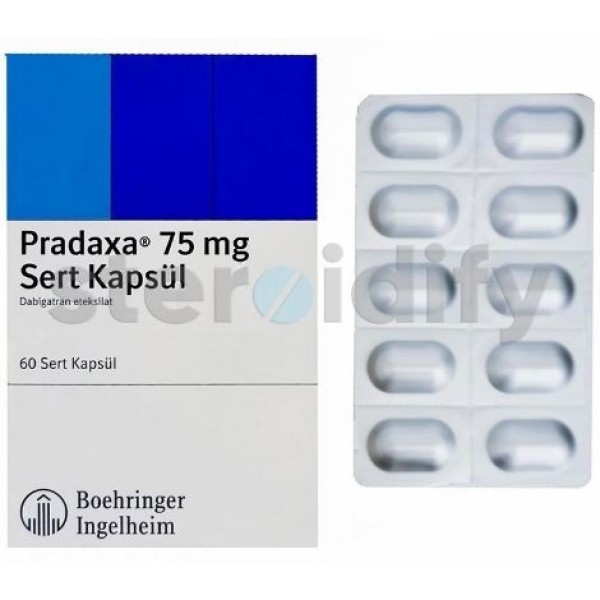

Understanding PRADAXA Boehringer Ingelheim: Key Features and Mechanism
PRADAXA Boehringer Ingelheim is a groundbreaking anticoagulant medication designed to prevent and treat various thromboembolic disorders. Its primary active ingredient, dabigatran etexilate, functions as a direct thrombin inhibitor. This mechanism of action differentiates it from traditional anticoagulants, as it prevents the conversion of fibrinogen into fibrin, a critical process in blood clot formation. By inhibiting thrombin, PRADAXA effectively reduces the risk of forming harmful blood clots that can lead to serious conditions such as stroke and deep vein thrombosis.
One of the key features of PRADAXA Boehringer Ingelheim is its predictable pharmacokinetics, which allows for fixed dosing without the need for routine monitoring of the anticoagulation effect. This offers significant advantages over older medications, such as warfarin, which requires regular blood tests to measure drug levels and adjust dosages. Additionally, PRADAXA has been associated with a lower risk of intracranial hemorrhage compared to traditional therapies, providing a safer option for patients at risk of stroke due to atrial fibrillation.
Forms of Release for PRADAXA Boehringer Ingelheim
PRADAXA Boehringer Ingelheim is available in oral capsule form, which provides an accessible route of administration for patients. These capsules are typically offered in various strengths to accommodate individual patient needs and treatment plans. The standard dosing regimens usually involve taking the medication twice daily, which helps maintain stable drug levels in the body while providing effective anticoagulation.
The formulation is designed to allow for rapid absorption into the bloodstream, ensuring that it reaches therapeutic levels quickly to provide timely protection against thromboembolic events. Due to its stability and effectiveness, PRADAXA can be conveniently taken with or without food, making it easier for patients to incorporate into their daily routines.
Comparative Advantages of PRADAXA Boehringer Ingelheim
What sets PRADAXA Boehringer Ingelheim apart from other anticoagulants is its unique mechanism of action and favorable safety profile. Unlike vitamin K antagonists, PRADAXA does not require dietary restrictions or routine INR monitoring, which can be burdensome for patients. This makes it an attractive option for individuals who prefer a more straightforward treatment regimen.
Moreover, PRADAXA has demonstrated efficacious outcomes in various clinical trials, showing a significant reduction in the risk of stroke and systemic embolism in patients with non-valvular atrial fibrillation. It also presents a lower risk of major bleeding events compared to other anticoagulants, which is vital for patient safety. Additionally, PRADAXA offers the convenience of a fixed-dose regimen, unafflicted by variations in diet or concomitant medications, which can complicate traditional anticoagulant therapy.
Long-term Usage Considerations and Contraindications
The long-term usage of PRADAXA Boehringer Ingelheim provides significant advantages in maintaining anticoagulation therapy and preventing recurrent thromboembolic events. However, it is essential to understand the contraindications associated with this medication. PRADAXA is not recommended for patients with active bleeding disorders, severe renal impairment, or those who have a known allergy to dabigatran or other components of the formulation.
Additionally, the use of PRADAXA is not advisable in pregnant or breastfeeding women, as the effects on fetal development or nursing infants are not fully understood. It is also contraindicated in children and is restricted for use in specific populations, including individuals with certain gastrointestinal conditions that may lead to increased bleeding risk. A thorough discussion with a healthcare provider is necessary to ensure that PRADAXA is the right choice based on individual health profiles and risk factors.
Practical Advice for Using PRADAXA Boehringer Ingelheim
When considering the initiation of treatment with PRADAXA Boehringer Ingelheim, it is critical to follow a few practical guidelines to ensure safe and effective use. Firstly, consult with a healthcare professional to assess personal medical history, current medications, and other factors that may impact the decision to use this anticoagulant.
Once prescribed, adherence to the prescribed dosing regimen is crucial. This includes taking the capsules at the same time each day, which can help maintain stable levels of the medication in the body. If a dose is missed, patients should take it as soon as they remember, unless it is nearly time for the next scheduled dose. In such cases, double dosing should be avoided.
Lastly, keep an open line of communication with healthcare providers regarding any side effects, new medications, or changes in health status. Being proactive in managing one’s treatment can optimize the benefits of PRADAXA Boehringer Ingelheim and ensure ongoing safety throughout the anticoagulation therapy.


There are no reviews for this product, be the first to leave your review.


No questions about this product, be the first and ask your question.
